Monday, April 16, 2012

Low birth weight and polycystic kidney disease.

Getting the Post Birth Weight
Getting the Post Birth Weight (Photo credit: UhDuh)
Orskov and colleagues in a large danish autosomal polycystic kidney disease cohort believe that they have demonstrated what they think is a direct effect of birth weight on outcomes in polycystic kidney disease. In the previously mentioned study each kilogram of birth weight extended the mean age of ESRD onset by 1.7 years.

It is believed that this mechanism may be due to any or all of the following.


  • Placental insufficiency.
  • Activation of the Renin Angiotensin Aldosterone System.
  • Increased Fetal Vasopressin levels. 
  • Increased Insulin like growth factor levels. 
  • A reduction in total nephron number. 
It had been proposed many years earlier that what happens in utero to the developing child directly influences the adult, giving rise to a variety of adult chronic diseases such as diabetes mellitus and metabolic syndrome. 

ID#: 861 Description: Gross pathology of polyc...
ID#: 861 Description: Gross pathology of polycystic kidneys. Gross pathology of polycystic kidneys. Ureters are visible. Content Providers(s): CDC/Dr. Edwin P. Ewing, Jr. Creation Date: 1972 Copyright Restrictions: None - This image is in the public domain and thus free of any copyright restrictions. As a matter of courtesy we request that the content provider be credited and notified in any public or private usage of this image. (Photo credit: Wikipedia)


Enhanced by Zemanta

Sunday, April 15, 2012

Complications of Lithotripsy.

Kidney Stone
Kidney Stone (Photo credit: peterjr1961)
Extra corporeal shock wave lithotripsy is an accepted well tried and proven method of treating specific types of kidney stones. It has been used consistently since the 1980's for the treatment of kidney stones. It is widely recognized as the leading noninvasive method of treating acute and chronic kidney stones. although side effects are generally mild and well tolerated it should be borne in mind that the best way of avoiding complications is by being aware of the contraindications for the procedure to begin with; these include..
3 mm stone in the ureter
3 mm stone in the ureter (Photo credit: Wikipedia)


  1. Pregnancy
  2. Uncontrolled Infections of the urinary tract
  3. Uncontrolled alteration of coagulation
  4. Aortic or renal artery aneurysm
  5. Serious skeletal malformations
  6. Serious obesity. 
Complications arise from. 
  • Formation and passage of fragments. 
  • Infections
  • Effects on kidney function
  • Hypertension. 
FORMATION AND PASSAGE OF FRAGMENTS. 

If the stone is large but by its nature non obstructing of renal urine flow, then incomplete lithotripsy may break the fragment into pieces which are smaller but not small enough  to pass down the ureter. Thus giving rise to obstruction of the ureter and pain. There are technical factors which may result in incomplete fragmentation, other factors include location of the stone, volume and number of stones (patient specific factors).

  • Calcium oxolate, struvite and uric acid stones are likely to fragment and are easily passed. 
  • Other stones are less likely to be completely broken up. 
  • The location of the stone are also a factor as stones located in the lower pole of the kidney have a lower chance of being successfully treated.
  • The higher the number of stones the more likely relapse will occur. 
  • The chance of success for ureteral stones is higher but the exact location within the ureter may matter. 
  • Title: Ultrasonic instrument and kidney stone ...
    Title: Ultrasonic instrument and kidney stone Image ID: 4172 Photographer: Unknown Restrictions: Public Domain Abstract: Photograph-One 5x7 photograph, with a slip of paper taped to the back. The slip of paper describes the photograph. The caption reads: This x-ray shows the ultrasonic instrument in direct contact with a large stone in the kidney. http://fmp.cit.nih.gov/hi/ (Photo credit: Wikipedia)
  • Larger stones are more difficult to break up completely. 
One complication related to the pile up of incomplete fragments is called steinstrasse, usually occuring in patients with stones greater than 2 cm or staghorn stones. Most patients will be asymptomatic, however significant pain may occur due to repeated episodes of colic as the fragments are passed. In some cases obstruction of the ureter may lead to dysfunction of the kidney and this may require passage of a nephrostomy which is a tube to bypass the obstruction until further therapy can be done in the form of repeat lithotripsy or more invasive methods. 
Medical X-rays, kidney and ureter stones.
Medical X-rays, kidney and ureter stones. (Photo credit: Wikipedia)
Wherever a large stone burden exists there is the likelihood of infection and as such even in asymptomatic patients one should be vigilant for occult urine tract infection as early treatment is essential to prevent further complications. The epithelial lining of the ureter is frequently disrupted when it absorbs the sound wave energy used in lithotripsy. The end result is that urine is now more easily infected.

Other complications are rare and may include formation of haematoma near the kidney. Cardiovascular complications such as an irregular heartbeat may occur but are usually benign. It may however be wise for patients with aneurysmal dilations of the major arteries related to the kidneys to avoid lithotripsy. 
There is some controversy regarding the incidence of hypertension after lithotripsy particularly diastolic hypertension however no concrete recommendations have been made regarding this. 

REFERENCES.

Review Article

Complications of Extracorporeal Shock Wave Lithotripsy for Urinary Stones: To Know and to Manage Them—A Review

Department of Urology, Catholic University School of Medicine, Policlinico “A. Gemelli”, Largo F. Vito, 00168 Rome, Italy
Received 19 October 2011; Accepted 5 December 2011.


Enhanced by Zemanta

Wednesday, April 11, 2012

Preventing Bleeding (hematuria) in Polycystic Kidney Disease

Tranexamic Acid


Image: by

Tranexamic acid is by no means a new drug it has been used routinely in surgery, for years particularlywhere there is a high risk of bleeding. Acting to prevent the breakdown of fibrin one of the key components of a blood clot, this drug has been found to decrease the risk of death from multiple trauma and is considered an essential medication by the World Health Organization.

Tuesday, April 10, 2012

New Hope For Patients With Polycystic Kidney Disease

Polycystic Kidneys

The somatostatin analogue Lanreotide has been found to decrease polycystic liver volume via the mechanism of reduction of intracellular signaling of cAMP. In the study that demonstrated this finding it was also found that patients with polycystic kidney disease showed a trend towards decreased rate of cyst growth i.e they increased their kidney volumes slower than patients who were not given the drug.

Sunday, February 21, 2010

Diuretic or Calcium Channel Blocker for CKD

It has been suggested by researchers that the diuretic clorthalidone should be the first line of antihypertensive therapy with a few caveats. Firstly in the presence of certain co-morbidities other drugs with a proven track record of reducing end organ damage should be instituted as first line instead. Thus it has been suggested that in patients with diabetic kidney disease and angiotensin receptor blocker (ARB) be commenced early due to its proven reno-protective effects in type 2 diabetics with kidney disease.
The results of the ACCOMPLISH trial as reported in the LANCET may change the above approach.

Thursday, December 10, 2009

Steroids and Kidney Disease


A study published in the Journal of the American Society of Nephrology has suggested a link between kidney disease and long term steroid use. Body builders who utilize steroid for the purposes of increased training performance seem to be the population at risk. The body builders were confirmed to develop a type of kidney disease known as focal and segmental glomerulosclerosis also known as FSGS. Although categorized as scarring of the kidney and known to occur as a final pathway of injury in numerous

(image from wikipedia.org)

Thursday, November 26, 2009

Biomarkers for Cancer of the Kidney

Medscape is reporting new research points to several biomarkers (molecules that can be tested for in relationship to a disease) have been found which may predict the odds of survival in renal cell cancer.

The data reviewed is derived from the TARGET study Treatment Approaches in Renal Cancer Global Evaluation Trial.

"Carol Peña, PhD, associate director for clinical cancer biomarkers at Bayer HealthCare Pharmaceuticals, and colleagues conducted an analysis on a subset of the patients enrolled in TARGET to evaluate the relation between biomarker levels and outcomes.

Wednesday, November 25, 2009

Sleep apnea and Transplantation

Health day has reported that patients with sleep apnoea are at increased risk of high blood pressure, heart disease and stroke. Excerpt below

Timt775


"Kidney transplant patients with sleep apnea are at increased risk for high blood pressure, heart disease and stroke, Hungarian researchers say.

Wednesday, November 18, 2009

Sirolimus for Polycystic Kidney Disease

http://phil.cdc.gov/PHIL_Images/02071999/00002/20G0027_lores.jpg

New treatment options for polycystic kidney disease do not come along very often. The nature of the disease is such that treatment is inherently difficult as the pathophysiology is incompletely understood.

Despite that various methods are currently being investigated. One such is the drug sirolimus, which  has been mentioned before. More recently however a pilot study performed in adult polycystic kidney disease patients has added further hope that sirolimus may one day be used routinely in this disease.

Monday, November 16, 2009

Preventing Repeat Hospitalization in Dialysis

Zdravotnická_záchranná_služba_Jihočeského_kraj_Volkswagen_Crafter_Strobel.jpg

Dialysis patients are known to have greater rates of hospitalization as compared to other patients. The cause for this is believed to be multifactorial. The present study by Chan et. al. looks at possible factors which may reduces the rate of hospitalization of dialysis patients after an initial admission.

The population studied was quite large with over 126,000 dialysis patients involved. The premise of the study was that the management strategy at the time of first discharge was a significant contributor to the time to readmission of the patient.  The Primary outcome of the investigation was therefore readmission of the patient within 30 days.

Friday, November 13, 2009

What is Intradialytic hypertension?


Peng


High blood pressure after dialysis or towards the end of dialysis is a nuisance problem that just seems to keep coming up in every dialysis unit. Frequently patients are kept for observation or admitted which increases the cost of giving care. It can also be quite frustrating to treat. This phenomenon is known as intradialytic hypertension and may require more than loading more and more medication onto the patients chart.

Monday, November 9, 2009

Beneficial Effect of Coffee in Dialysis Patients


Julius Schorzman


Coffee is arguably the most popular beverage worldwide yet its impact on renal disease is largely unknown and its effect on dialysis patients is even more obscure.

There have been many claims of medicinal or health benefits for drinking coffee. Studies have shown apparent reductions in the risks of:


  • Alzheimer's disease

  • Parkinson's disease

  • Heart disease

  • Diabetes mellitus type 2

  • Cirrhosis of the liver

  • Gout.

Recently a small study has reported that dialysis patients who drink coffee were more likely to have lower cholesterol. Of the 30 patients studied 26 were on peritoneal dialysis and only 4 were on hemodialysis.

The patients were divided into two groups. Group I patients drank 1-3 cups of coffee per day for 2 years prior to the study. The second group consisted of patients who self reported no intake of caffeinated coffee over the same period.

The investigators reported that serum lipid profile, anthropometric and bioimpedance measurements, and laboratory indices of nutrition and inflammation status were examined for both groups.

Patients in Group I had higher levels of HDL and lower LDL when compared to group II. Patients in group I were also found to have lower waist and hip circumferences, a lower waist/height ratio, a lower fat body mass, and a higher lean body mass as a percentage of total body mass.

These finding when taken together suggest that dialysis patients who drink coffee may be more likely to have a more favorable lipid profile as well as higher lean body mass and a lower body mass index.

ABSTRACT BELOW:

We checked whether dialysis patients who drink coffee might have a serum lipid profile different from that of nondrinkers of coffee. The study was performed in 30 patients (26 on peritoneal dialysis, 4 on hemodialysis). Group I included patients who drank 1 - 3 cups of coffee daily (140 - 420 mg caffeine) for at least 2 years before the study [n = 11; dialysis vintage: 29.1 months (range: 8.7 - 59.6 months); age: 56.0 +/- 14.6 years]. Group II consisted of patients who said that they were nondrinkers of caffeinated coffee [n = 19; dialysis vintage: 15.2 months (range: 6.3 - 45.4 months); age: 56.3 +/- 19.8 years). Serum lipid profile, anthropometric and bioimpedance measurements, and laboratory indices of nutrition and inflammation status were examined. Compared with group II, group I showed higher serum high-density lipoprotein (HDL) cholesterol (45.1 +/- 12.8 mg/dL vs. 37.7 +/- 6.6 mg/dL, p = 0.045) and lower low-density lipoprotein (LDL) cholesterol (104.7 +/- 15.7 mg/dL vs. 139.0 +/- 41.8 mg/dL, p = 0.007). Other examined parameters did not differ significantly between the groups, with the exception of serum albumin [4.0 g/dL (range: 3.1 - 4.3 g/dL) in group I vs. 3.3 g/dL (range: 2.9 - 4.4 g/dL) in group II, p = 0.020]. Adjustment for age and sex additionally showed differences in bioimpedance and anthropometric measurements. Compared with group II, group I showed lower waist and hip circumferences, a lower waist/height ratio, a lower fat body mass, and a higher lean body mass as a percentage of total body mass. When adjustments were made for age, sex, and fat body mass, differences in lipid profile were nonsignificant. In the overall group, a correlation was seen between lean body mass and total cholesterol (r = -0.487, p = 0.006). Lower LDL and higher HDL serum cholesterol may occur in dialyzed patients who drink coffee not only because of the direct influence of coffee ingredients on serum lipid profile, but mainly because of a more favorable body composition and better protein nutrition in coffee drinkers.

Friday, November 6, 2009

New Dialysis Modality Daily OL-HDF

CVVHD A DIAGRAM AUTHOR UNKNOWN.


A study published in the november issue of Nephrology Dialysis and Transplantation has reported that growth retardation in pediatric dialysis patients (the propensity for children to not achieve normal height) can be improved by a type of dialysis known as daily on line hemodiafiltration (DOLHDF).

OLDHDF is a treatment modality that combines two types of treatment into one. Standard dialysis which utilizes diffusion of solutes from within the blood stream across a dialysis membrane and into the dialysate is combined with toxin removal via a process call ultrafiltration. Many dialysis patients will already by familiar with the process of ultrafiltration, sometimes painfully so as lots of ultrafiltration is associated with cramping on dialysis.

Ultrafiltration is the process of filtering water from the patients blood stream via creation of a negative pressure gradient down which water will naturally flow. The process of ultrafiltration is not purely removal of water however as whatever is dissolved in the water is dragged along with it across the dialysis membrane and out of the blood. The size of the pores in the dialyser determines what stays behind and what is lost. This type of ultrafiltration present in the daily treatment of many patients on dialysis is not particularly effective at clearing toxins from the blood and is primarily used for volume control in the treatment of fluid overload.

By improving the efficiency of the process by adding an additional solution into the dialyser along with the blood more toxins are forced across the dialyser membrane and pure dialysis with ultrafiltration becomes hemodiafiltration. The additional solution added to the dialyser has to be as sterile as IV fluid which has traditionally kept this modality confined to the ICU. But new methods have recently become available that allows for the generation of the replacement solution as needed in a sterile manner. This process has served to reduce the cost of the modality and has allowed studies such as the one outlined hear to be possible.

The efficiencies of dialysis via this modality is superb and when combined with daily dosing may be responsible for the good outcomes outlined in the abstract below.


BACKGROUND:

In children, growth can be used as a measurable parameter of adequate nutrition and dialysis dose. Despite daily administration of recombinant human growth hormone (rhGH), growth retardation remains a frequent problem in children on chronic dialysis. Therefore, we performed an observational prospective non-randomized study of children on in-centre daily on line haemodiafiltration (D-OL-HDF) dialysis with the aim of promoting growth. Patients and methods. Mean age at the start of the study was 8 years and 3 months, and all children had been receiving rhGH treatment for >12 months before enrolment. Mean follow-up time on D-OL-HDF was 20.5 +/- 8 months (range, 11-39 months). Renal residual function was either <3 mL/min/1.73 m(2) or anuric. Vascular access was a fistula (13/15) or a central venous catheter (2/15). Dialysis was delivered daily, six days a week in 3 hourly sessions (18 h/week), in a predilution OL-HDF mode, allowing a high convective volume (18 to 27 L/m(2) body surface area per session), Kt/V(urea) on line measured at least 1.4 per session. RESULTS: Mean growth velocity increased from 3.8 +/- 1.1 cm/year at inclusion to 14.3 +/- 3.8 cm/year during the first year of D-OL-HDF, resulting in a change in height standard deviation score (SDS) over the follow-up period from -1.5 +/- 0.3 SDS to +0.2 +/- 1.1 SDS. Increase in body mass was also noted without impaired control of blood pressure. Time-average deviation for urea (TAD(urea)) was low at 2.5 +/- 0.4 as was TAD(bicarbonate) due to the normal pre and post dialysis bicarbonate levels, respectively, 23.6 +/- 0.5 mmol/L and 26.6 +/- 0.5 mmol/L. The absence of any dietary restrictions permitted a mean protein diet intake (PDI) of 2.5 +/- 0.2 g/kg/day (PDI measured from a 3-day diet survey), contrasting with a mean normalized protein nitrogen appearance (nPNA) of 1.53 +/- 0.12 g/kg/day (nPNA calculated from urea dialytic kinetic). A low C-reactive protein was noted in 13/15 children, and mean beta(2) microglobulin was low, 15.3 +/- 0.3.3 mg/L.

CONCLUSIONS:

Daily OL-HDF promotes catch-up growth in children despite being on chronic dialysis. This catch-up growth if continued, should allow the children to reach their mid-parental target height in the future. It could be speculated that the improved response to rhGH is the result of several combined factors conducting to less malnutrition and to less cachexia.

Wednesday, November 4, 2009

Latest Kidney News: Post ASN Round Up.


AttributionNoncommercialNo Derivative Works Some rights reserved by Michael in San Diego, California


Medwire is reporting improved survival among Finnish patients with Type 2 diabetes mellitus on dialysis. This report is based on a study done 314 dialysis patients in Finland published online in the journal nephrology dialysis and transplantation.

The reason for improved survival is believed to be due to improvement in diabetes care over the years studied, which were 1995 to 2005. Elements of improved care which have been cited include better blood pressure control with newer drugs as well as adherence to modern protocols concerning the control of blood glucose in diabetes.

Medpage is reporting that the use of EPO has been trending upwards for the last few years, supporting data has been recently published in abstract and presented at the ASN this year. However the data captured did not include years after the outcome of several negative trials for the use of EPO in the treatment of anemia in CKD. Trials such as CHOIR and CREATE or more recently TREAT. The importance of this abstract lies in the insight that it may give into the prescribing patterns of doctors at baseline. Not surprisingly it seems that the general perception of doctors had been more EPO is better to maintain Hb in as normal away as possible. Given the current evidence that suggests that this may increase stroke related morbidity and mortality a huge amount of effort will have to be invested in education to alter the thought processes in this counter intuitive area of medicine.

It is however good news that in one large nephrology practice in Delaware physicians altered their practice post CREATE and CHOIR sufficiently to see a considerable decline in the use of EPO and the reduction of mean Hemoglobin levels among patients. It is not yet certain if these changes will lead to any increase in survival or decrease in cardiovascular events.

The idea that higher doses of EPO are associated with poorer outcomes has yet to be rigorously tested although potential mechanisms may exist to explain this. Recently as published in Medpage today the dose of EPO required to meet target hemoglobin has been found to be lower in patients on nocturnal hemodialysis. This is a further benefit of a dialysis modality that can be considered the next best thing to transplantation.

Monday, November 2, 2009

Darbepoetin alfa is unsafe as well?


Redbloodcells.jpghematologist
Darbepoetin alfa is a an erythropoesis stimulating agent marketed under the name Aranesp by AMGEN. It is used for the treatment of anemia ( a lower than normal blood count) as a consequence of renal failure or cancer.

The use of other similar agents has been questioned over the last 2 to 3 years due to studies in both patients with cancer as well as patients with CKD and on dialysis, which demonstrated an increased risk of mortality, which was due in large part to cardiovascular disease particularly stroke.

The debates that occurred due to the outcome of these studies were legendary, due to the counterintuitive findings that suggested treatment to a target normal Hb was dangerous. Yet some learned individuals maintained that the issue was less the target Hb and more the dose of EPO and time required to achieve the target. With higher doses and more steep rises in Hb associated with increased mortality as suggested by secondary analysis of some rather large studies.

The latest study to tackle this prickly topic hails from the New England Journal of Medicine and the conclusion of the investigators of the TREAT study are as follows:

"The use of darbepoetin alfa in patients with diabetes, chronic kidney disease, and moderate anemia who were not undergoing dialysis did not reduce the risk of either of the two primary composite outcomes (either death or a cardiovascular event or death or a renal event) and was associated with an increased risk of stroke. For many persons involved in clinical decision making, this risk will outweigh the potential benefits."

This is quite a blow for proponents of EPO which I must admit includes the vast majority of nephrologists. Deep down at the gut level it just makes sense that replacing a missing hormone such as erythropoetin and returning the blood count to normal should be a good thing. We can identify very specific negative things that occur when the blood count is low we know by observation that quality of life suffers as well as the function of all organs.

Previous studies have demonstrated the use of Aranesp was..

1. More costly than other similar agents.
2. Safe...? infact Amgen the company developing Aranesp released preliminary results of the TREAT study. One of the Headlines went like this "Amgen Announces Top-Line Results Of Trial To Reduce Cardiovascular Events With Aranesp(R) Therapy (TREAT) In CKD Patients With Type-2 Diabetes" Evidently these top line results were that there was no reduction or increased risk of cardiovascular events at that time. Hardly what I would consider a top of the line result.

Despite logic and gut feelings, the writing on the wall is getting very hard to ignore. We should therefore be very cautious and inform our patients that this is still an area under investigation.

Saturday, October 31, 2009

New Treatments For FSGS -ASN Conference

FSGS 
Nephron
Idiopathic focal and segmental glomerular sclerosis or FSGS is one of the most common causes of non diabetic kidney disease in the world and also one of the least satisfying to treat due to the difficulty with initiating and maintaining a durable remission. For decades the standard of treatment has been steroid therapy in high doses given either daily or every other day. This results in significant toxicity which includes the development of diabetes mellitus, osteoporosis, personality changes, weight gain, easy bruising etc. Yet these negative effects of steroid therapy are outweighed significantly by the result of not treating FSGS as the disease will usually progress to end stage renal disease (with a requirement for dialysis and transplantation). Even after transplantation there is a risk of recurrence of the disease within hours after surgery in some patients.

If ever there was a nephropathy in need of new treatment options it would be FSGS.

NEW OPTIONS

  • Oral dexamethasone for FSGS

Oral dexamethasone was found to be as effective as steroid therapy, not superior however. The side effect profile is very similar. It is unlikely that further studies will change the outlook for dexamethasone as an alternative therapy

  • Rituximab

Rituximab in FSGS has had a stormy course with the safety of rituximab as a therapeutic option under scrutiny due to deaths from a rare condition known as plemorphic multifocal leucoencephalopathy. The first cases were seen in patients with lupus treated with rituximab. Response rates to rituximab have varied in different studies implying that perhaps there are certain patient specific factors which predispose for response to rituximab. The key for the future of rituximab will be identifying patients with FSGS who are likely to respond.

  • Rosiglitazone

This drug is primarily used in the treatment of type 2 diabetes where it acts to reduce insulin resistance and enhance glucose uptake into skeletal muscle. The drug however has an antifibrotic effect which may be useful in FSGS this drug is currently undergoing phase I trials.

  • Adalimumab

This drug is an inhibitor of tumour necrosis factor one of the major cytokines (hormone produced by cells that affect other cells ) that induces inflammation. Inhibition of TNF is a possible pathway for treating FSGS. The FONT II study will look at the efficacy of adalimumab in patients with FSGS.

  • Retinoids

Wikipedia defines retinoids as " A class of chemical compounds that are related chemically to vitamin A. Retinoids are used in medicine, primarily due to the way they regulate epithelial cell growth. Retinoids have many important and diverse functions throughout the body including roles in vision, regulation of cell proliferation and differentiation, growth of bone tissue, immune function, and activation of tumor suppressor genes."

What that essential translates to is that retinoids are a group of molecules that alter the expression of a variety of genes some of these genes are important to the proliferation of cells within the kidney and may play a role in the mechanism of FSGS. Trials with accutane (a retinoid currently used for treatment of acne) are currently at phase II.

  • Perfinidone

Which has been shown to be helpful in diabetic nephrosclerosis has shown some efficacy in FSGS as well. The drug is capable of altering the rate of decline of kidney function in FSGS however it does not induce remission. It also does not alter proteinuria.

So some hope exists for improving the treatment of FSGS but it is still early days for almost all of the above.

Friday, October 30, 2009

ASN conference day 2


AttributionNoncommercialNo Derivative Works Some rights reserved by Michael in San Diego, California 


The conference has been extremely crowded so far with some talks having to close doors due to inability to accommodate any more people after all sitting and standing room has been exhausted. So I have turned to the poster sessions in attempt to connect with some of the breaking research which is yet to be published. When they are eventually published the data presented in posters may be the source of the next oversubscribed big session at ASN next year.

Dr. Mita M shah et. al. sought to answer the question as to whether the immune system in older patients becomes less responsive. If this is true then older patients who receive transplants will need less medication. This would be an important finding because immunosuppressive medications have side effects which worsen lipid profile and may place a group already at risk for cardiovascular disease at further risk of increased events.

In the study that is yet to be published 158 stable patients were followed for roughly 6.5 years post transplant. The end result was that there was no basis for discontinuing or decreasing immunosuppressives  in older patients. In fact doing so may decrease graft survival.

Dr. Abdelaziz En-Nia presented a poster on polymorphism within the HLA-DR gene promoter and the predictive effect on post transplant kidney rejection and cardiovascular events. This is novel research that suggests that the HLA-DR locus that is routinely tested for prior to transplantation may be involved in the cardiovascular outcome post transplant. Cardiovascular disease mortality being one of the major causes of death after transplantation. Being able to isolate a subset of patients on a genetic basis who are more prone to cardiovascular disease will allow more aggressive therapy for the patients that need it most post transplantation which may translate into survival.

Dr. G Dreyer et. al presented a poster on the variation of Vitamin D levels in a multi ethnic renal transplantation population. The basis of the study was the fact that vitamin D deficiency is highly prevalent in patients after renal transplantation. This being important because of the risk of increased infections in patients with vitamin D deficiency and immunosuppression.

The unpublished results suggest that vitamin D levels vary considerably by ethnic group post transplant when other factors are controlled or accounted for. South Asians and Black patients having the lowest levels of vitamin D.

Research of Gudrun E Norby and others from Oslo in Norway have shown that SLE transplanted patients have equal survival of the transplanted kidney as other patients. However patients with SLE are at higher risk of death after tranplantation most likely from cardiovascular disease. This increased risk of cardiovascular disease in patients with SLE has been described before in the SLE patients with and without cardiovascular disease.

Thursday, October 29, 2009

Highlights of the American Society of Nephrology Conference Day 1.

AttributionNoncommercialNo Derivative Works Some rights reserved by Michael in San Diego, California 

After a whirlwind 12 hours of connecting flights I have finally arrived in San Diego to attend this years American Society of Nephrology conference.

The opening session of the 42nd annual conference was kicked off with an engrossing lecture by Nobel Prize winner Dr. Roger Tsien MD.

Dr Tsien gave an overview of his prize winning research on labeling of molecules with photo-labile elements and fluorescent techniques which allow direct visualization of processes which could only previously be imagined. The highlight of his presentation was his novel use of color as a tool and guide for surgeons. By injecting molecules that bind to cancer cells or their products, cancer cells can be made to glow any color that he chooses. This allows the operating surgeon to see the extent of the tumor in realtime allowing the possibility of more complete resection of tumors and thus increasing the chances of cure.

The possibilities opened by this research are amazing, almost any molecule can be tagged by his method and then linked to a marker of his choosing. Gadolinium for instance can be applied as a marker instead of a light emitting compound if the true extent of the tumor needed to be visualized on MRI.

Also of note........

The John P Peters Award was awarded to William E Mith MD, FASN for a lifetime of work in renal nutrition, muscle protein catabolism and acidemia induced muscle protein metabolism.

The Outcome of three major studies are expected to be revealed this year.

FAVORIT - The purpose of this randomized clinical trial is to determine if lowering homocysteine levels in renal transplant recipients with a multivitamin will reduce the occurrence of cardiovascular disease outcomes.

ROADMAP - ROADMAP is a randomized, double-blind, placebo-controlled, parallel-group, multi-center Phase III study being conducted at 262 collaborating centers in 19 European countries. The primary goal of the study is to test the hypothesis that treatment of T2DM patients with 40 mg of olmesartan medoxomil will prevent or delay the occurrence of microalbuminuria in comparison to a regimen that excludes agents that directly block the RAS. The secondary objective is to test the hypothesis that treatment with olmesartan medoxomil has a positive effect on cardiovascular and renal morbidity and mortality.

TREAT - Will evaluate whether treatment of anemia with Aranesp (darbopoietin) reduces cardiovascular events in patients with chronic kidney disease and with type 2 diabetes.

One of the most interesting papers mentioned today in the presidents opening address was the localization of increased risk of non-diabetic kidney disease in African Americans to the Myh9 gene locus. This finding may finally explain why African Americans are at increased risk of kidney disease and ultimately lead to understanding the mechanism of this increased risk thus guiding more specific therapy for patients with the gene.

Stay tuned the conference has only just begun....

Saturday, October 24, 2009

Insulin Resistance and Kidney Disease, some thoughts.

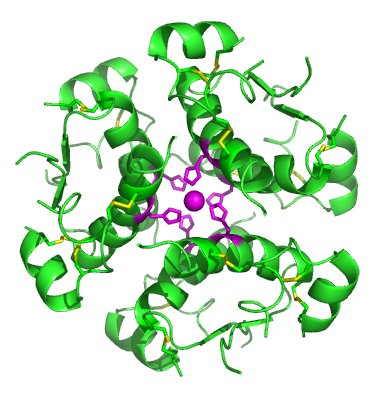
Insulin molecule courtesy wikipedia.


Insulin resistance is a term many doctors and scientists are already familiar with. However not that many patients have a concept of exactly what is meant by resistance to insulin. Other than its role in the causation of type 2 diabetes, Ginsberg considers insulin resistance a major underlying abnormality driving cardiovascular disease, the major cause of morbidity and mortality in much of the world.

Although most of the research produced thus far focused on the role of insulin resistance in diabetics, it is now apparent that insulin resistance is important in its own right.

Insulin resistance is a syndrome that has been linked to increased risk for cardiovascular disease. However its effect is believed to act via promoting dyslipidemia, hypertension, hypercoagulability, and atherosclerosis.

In terms of kidney disease it has been shown by other authors that insulin resistance correlated linearly with decline in renal function. Independent variables related to insulin resistance were bicarbonate and Apo A-1/B levels in patients with chronic kidney disease. Low serum bicarbonate has been implicated in increased bone disease of renal failure and poor cardiac function as well increasing the pace of progression to end stage renal disease an effect that can be ameliorated in part by the prescription of bicarbonate. It would therefore not surprise me if insulin resistance were associated in some future study with increased progression to end stage renal disease. The Treatment of insulin resistance will likely then be a significant issue for patients with kidney disease.

Rosiglitazone is an oral drug that reduces the amount of sugar (glucose) in the blood. It is used for treating patients with type 2 diabetes. It is one of the few drugs currently available capable of reducing insulin resistance. The drug itself is not without side effects, there have been warnings issued regarding a propensity for the development of heart failure in some patients on this drug.

Type 2 diabetic patients on dialysis may derive benefits from this drug both in terms of glucose control as well as reduced insulin resistance. While the question of the safety of rosiglitazone among patients on dialysis still remains to be fully answered, a study of 24 patients on CAPD treated with rosiglitazone has revealed interesting evidence that the drug has no long term negative effects on cardiac function in CAPD patients. Although the study was small, it is somewhat reassuring that the drug may also be safe in patients with lesser degrees of kidney failure.

Once the drug is deemed safe in patients with kidney disease it would be interesting to see a randomized control trial sufficiently powered to determine if rosiglitazone has any impact on the progression of renal disease. If the answer is no then insulin resistance may just be another marker of the inflammatory state that is uremia instead of a driver of progression in and of itself.

Thursday, October 22, 2009

Peritoneal Dialysis and Encapsulating Peritonitis


Copyright © 2012 by American Roentgen Ray Society
Sclerosing encapsulating peritonitis.

Peritoneal dialysis relies on the peritoneal lining as a surface for the exchange of substances during dialysis. However the peritoneal membrane was never intended to be used for this purpose. The goal of peritoneal dialysis research is to find the least traumatic and disruptive method of ensuring efficient dialysis occurs for as long as possible before the peritoneal lining is "worn out". The greatest advance in this area would entail some method that allows the membrane to continue to function indefinitely.

One of the unsolved problems remains the absence of any clear way to predict the peritoneal membrane will react under the same circumstances from patient to patient. For instance some patients are able to withstand recurrent infections with very little structural alterations to the peritoneum while others have to be switched to hemodialysis  after one or two episodes of peritonitis.

Arguably the most feared complication of PD is an entity known as encapsulating peritoneal sclerosis (EPS) or sclerosing encapsulating peritonitis. This condition is multifactorial and thankfully quite rare with dialysis induced EPS being rarer still.


Identifiable causes include

  • Post surgical.

  • Medication with Beta blockers.

  • Cirrhosis with ascites.

  • Generalized Peritonitis of any cause.

  • Peritoneal dialysis.

Encapsulating peritoneal sclerosis is characterized by inflammation of the peritoneal lining with progressive scarring and shrinking of the area of the peritoneum, since the peritoneum surrounds the intestines the intestines are slowly compressed into a tight mass of tissue surrounding by strong fibrotic bands.

Because the bowel is now packed into a very small space obstruction of the bowel becomes more common. Symptoms include abdominal pain and retention of fluid in the abdomen.

The etiologies of EPS secondary to PD include

  • severe and/or nonresolving peritonitis, especially that due to Staphylococcus aureus, fungi, and Pseudomonas sp, and especially in the long-term patient.


  • Increased duration of PD has been assumed by some to be a risk factor for EPS.


  • Acetate-buffered PD solutions

  • certain β-blocking agents

  • the use of in-line bacterial filters

  • exposure to certain antiseptics or disinfectants. (chlorhexidine)

It is noted by Perl Bargman and Chan that "in more than half the patients who develop EPS, the diagnosis is made after transfer to hemodialysis (HD)."

It is therefore necessary to maintain a heightened state of suspicion for this condition in patients who have peritoneal membrane failure and have to be transferred to HD. Be particularly suspicious if unexplained gastrointestinal signs occur such as abdominal pain intermittent obstruction and ascites.

The earlier the diagnosis is made the better the outcome. Antiinflammatory medications may be helpful in the early stages later on surgical therapy with nutritional support at a centre that is specialized in this condition is required.