Showing posts with label Dialysis Info. Show all posts

Friday, November 13, 2009

What is Intradialytic hypertension?


Peng


High blood pressure after dialysis or towards the end of dialysis is a nuisance problem that just seems to keep coming up in every dialysis unit. Frequently patients are kept for observation or admitted which increases the cost of giving care. It can also be quite frustrating to treat. This phenomenon is known as intradialytic hypertension and may require more than loading more and more medication onto the patients chart.

Friday, November 6, 2009

New Dialysis Modality Daily OL-HDF

CVVHD A DIAGRAM AUTHOR UNKNOWN.


A study published in the november issue of Nephrology Dialysis and Transplantation has reported that growth retardation in pediatric dialysis patients (the propensity for children to not achieve normal height) can be improved by a type of dialysis known as daily on line hemodiafiltration (DOLHDF).

OLDHDF is a treatment modality that combines two types of treatment into one. Standard dialysis which utilizes diffusion of solutes from within the blood stream across a dialysis membrane and into the dialysate is combined with toxin removal via a process call ultrafiltration. Many dialysis patients will already by familiar with the process of ultrafiltration, sometimes painfully so as lots of ultrafiltration is associated with cramping on dialysis.

Ultrafiltration is the process of filtering water from the patients blood stream via creation of a negative pressure gradient down which water will naturally flow. The process of ultrafiltration is not purely removal of water however as whatever is dissolved in the water is dragged along with it across the dialysis membrane and out of the blood. The size of the pores in the dialyser determines what stays behind and what is lost. This type of ultrafiltration present in the daily treatment of many patients on dialysis is not particularly effective at clearing toxins from the blood and is primarily used for volume control in the treatment of fluid overload.

By improving the efficiency of the process by adding an additional solution into the dialyser along with the blood more toxins are forced across the dialyser membrane and pure dialysis with ultrafiltration becomes hemodiafiltration. The additional solution added to the dialyser has to be as sterile as IV fluid which has traditionally kept this modality confined to the ICU. But new methods have recently become available that allows for the generation of the replacement solution as needed in a sterile manner. This process has served to reduce the cost of the modality and has allowed studies such as the one outlined hear to be possible.

The efficiencies of dialysis via this modality is superb and when combined with daily dosing may be responsible for the good outcomes outlined in the abstract below.


BACKGROUND:

In children, growth can be used as a measurable parameter of adequate nutrition and dialysis dose. Despite daily administration of recombinant human growth hormone (rhGH), growth retardation remains a frequent problem in children on chronic dialysis. Therefore, we performed an observational prospective non-randomized study of children on in-centre daily on line haemodiafiltration (D-OL-HDF) dialysis with the aim of promoting growth. Patients and methods. Mean age at the start of the study was 8 years and 3 months, and all children had been receiving rhGH treatment for >12 months before enrolment. Mean follow-up time on D-OL-HDF was 20.5 +/- 8 months (range, 11-39 months). Renal residual function was either <3 mL/min/1.73 m(2) or anuric. Vascular access was a fistula (13/15) or a central venous catheter (2/15). Dialysis was delivered daily, six days a week in 3 hourly sessions (18 h/week), in a predilution OL-HDF mode, allowing a high convective volume (18 to 27 L/m(2) body surface area per session), Kt/V(urea) on line measured at least 1.4 per session. RESULTS: Mean growth velocity increased from 3.8 +/- 1.1 cm/year at inclusion to 14.3 +/- 3.8 cm/year during the first year of D-OL-HDF, resulting in a change in height standard deviation score (SDS) over the follow-up period from -1.5 +/- 0.3 SDS to +0.2 +/- 1.1 SDS. Increase in body mass was also noted without impaired control of blood pressure. Time-average deviation for urea (TAD(urea)) was low at 2.5 +/- 0.4 as was TAD(bicarbonate) due to the normal pre and post dialysis bicarbonate levels, respectively, 23.6 +/- 0.5 mmol/L and 26.6 +/- 0.5 mmol/L. The absence of any dietary restrictions permitted a mean protein diet intake (PDI) of 2.5 +/- 0.2 g/kg/day (PDI measured from a 3-day diet survey), contrasting with a mean normalized protein nitrogen appearance (nPNA) of 1.53 +/- 0.12 g/kg/day (nPNA calculated from urea dialytic kinetic). A low C-reactive protein was noted in 13/15 children, and mean beta(2) microglobulin was low, 15.3 +/- 0.3.3 mg/L.

CONCLUSIONS:

Daily OL-HDF promotes catch-up growth in children despite being on chronic dialysis. This catch-up growth if continued, should allow the children to reach their mid-parental target height in the future. It could be speculated that the improved response to rhGH is the result of several combined factors conducting to less malnutrition and to less cachexia.

Thursday, October 22, 2009

Peritoneal Dialysis and Encapsulating Peritonitis


Copyright © 2012 by American Roentgen Ray Society
Sclerosing encapsulating peritonitis.

Peritoneal dialysis relies on the peritoneal lining as a surface for the exchange of substances during dialysis. However the peritoneal membrane was never intended to be used for this purpose. The goal of peritoneal dialysis research is to find the least traumatic and disruptive method of ensuring efficient dialysis occurs for as long as possible before the peritoneal lining is "worn out". The greatest advance in this area would entail some method that allows the membrane to continue to function indefinitely.

One of the unsolved problems remains the absence of any clear way to predict the peritoneal membrane will react under the same circumstances from patient to patient. For instance some patients are able to withstand recurrent infections with very little structural alterations to the peritoneum while others have to be switched to hemodialysis  after one or two episodes of peritonitis.

Arguably the most feared complication of PD is an entity known as encapsulating peritoneal sclerosis (EPS) or sclerosing encapsulating peritonitis. This condition is multifactorial and thankfully quite rare with dialysis induced EPS being rarer still.


Identifiable causes include

  • Post surgical.

  • Medication with Beta blockers.

  • Cirrhosis with ascites.

  • Generalized Peritonitis of any cause.

  • Peritoneal dialysis.

Encapsulating peritoneal sclerosis is characterized by inflammation of the peritoneal lining with progressive scarring and shrinking of the area of the peritoneum, since the peritoneum surrounds the intestines the intestines are slowly compressed into a tight mass of tissue surrounding by strong fibrotic bands.

Because the bowel is now packed into a very small space obstruction of the bowel becomes more common. Symptoms include abdominal pain and retention of fluid in the abdomen.

The etiologies of EPS secondary to PD include

  • severe and/or nonresolving peritonitis, especially that due to Staphylococcus aureus, fungi, and Pseudomonas sp, and especially in the long-term patient.


  • Increased duration of PD has been assumed by some to be a risk factor for EPS.


  • Acetate-buffered PD solutions

  • certain β-blocking agents

  • the use of in-line bacterial filters

  • exposure to certain antiseptics or disinfectants. (chlorhexidine)

It is noted by Perl Bargman and Chan that "in more than half the patients who develop EPS, the diagnosis is made after transfer to hemodialysis (HD)."

It is therefore necessary to maintain a heightened state of suspicion for this condition in patients who have peritoneal membrane failure and have to be transferred to HD. Be particularly suspicious if unexplained gastrointestinal signs occur such as abdominal pain intermittent obstruction and ascites.

The earlier the diagnosis is made the better the outcome. Antiinflammatory medications may be helpful in the early stages later on surgical therapy with nutritional support at a centre that is specialized in this condition is required.

Wednesday, October 21, 2009

Cannulation Technique may Improve Fistula Survival


AV FISTULA


An AV fistula is the access of choice in patients starting dialysis. The use of AV fistula first is associated with less risk of infection which is a significant cause of morbidity and reduced survival in dialysis patients.

The technique used to cannulate a fistula is essentially the method used by the HD nurse to insert the venous and arterial needle into the fistula so that an adequate blood flow for the process of dialysis can occur.

However as noted by Van Loon et. al. "Little is known about cannulation of the vascular access (VA), such as the number of successful cannulation procedures, frequency of complications caused by cannulation, and VA failure."

The above investigators then went on to publish the results of a study conducted in incident dialysis patients who were followed for 6 months after the first successful cannulation with 2 needles.

Data collection included patient characteristics:

  • Comorbidities

  • Medication.

Vascular access characteristics:

  • Type of VA and location

  • Vein diameter

  • Length of the cannulation route

  • Maturation period.

The study took place between 2005 and 2007 in 10 Dutch dialysis facilities and ultimately included 120 patients.

For AV fistulas with a short cannulation route (small area for insertion of the needle) outcomes were negatively affected compared to those that had a longer area for cannulation.

Significant predictors of vascular access failure were previous use of central vein catheters and previous use of single needle dialysis.

The conclusion of the investigators was that "The present study demonstrated that during the first 6 months of a newly placed VA, a huge number of cannulation-related complications such as miscannulation, use of CVC, and SN dialysis are encountered."

So although fistula first is the logical choice in new patients, there are two important points that need to be noted. The fistula should be created in a manner that it is easily cannulated hence reducing cannulation errors and vascular access failure, according to this study the length of the cannulated limb of the fistula is very important in this regard.

Two cannulation technique is a wild card variable that is likely to vary widely from centre to centre based on differing levels of competence and experience between HD staff. The importance of cannulation has now been shown, the next step is standardizing techniques for cannulation and investigating access survival with different techniques and approaches to determine which technique or combination of techniques is best.

Friday, October 16, 2009

Muscle Cramps In Dialysis Treated By Vitamin E

muscle cramp

photo Credit:happeningfish

Cramping of the muscles while undergoing dialysis is one of the most frequent complaints of dialysis patients. It occurs in up to 20% of dialysis sessions.

  • Risk factors for cramping includes high weight gain in between dialysis sessions.

  • Having low serum calcium or derangement of sodium and potassium.

  • Intradialytic hypotension may also present with cramping of the muscles.

While many corrective actions may taken during the treatment to treat the cramps, it may be found that this interrupts treatment time and can reduce clearances and achieved ultrafiltration especially if sodium chloride is used repeatedly to treat the episodes of cramping.

Recently an article published in the American Journal of Therapeutics has shown that vitamin E maybe effective at preventing cramping during dialysis.

The basis for the study was that many reports previously suggested that vitamin E (vit. E) may be effective for the prevention of HD-associated cramps.

  • The investigators decided  to perform a selected controlled trial of supplementary vit. E for treatment of patients who are known to have frequent cramping episodes during and after dialysis.

  • They compared the number of attacks of muscle cramps with the patient's baseline over a specific period of time.

  • The study was admittedly small with only 19 HD patients. Patients were treated 400 IU of VIT E daily for 12 weeks.

THE RESULT

  • The frequency of muscle cramps decreased significantly during vit. E therapy, and, at the end of the trial, vit. E led to cramp reductions of 68.3%.  With no adverse effects.

  • The study was not definitive however due to its small size. The fact that vitamin E had no significant side effects at the doses suggests this may be worth trying if you have very severe cramps that is if your nephrologist agrees and you have addressed all the risk factors mentioned above.

Friday, September 11, 2009

Dialysis and Death the Double D's and DOPPS.

dialysis - session 4
dialysis - session 4 (Photo credit: wj gibson (Archie Goodwin))


Hemodialysis is a life saving therapy for patients with severe kidney disease. The therapy is well established and is the most readily available form of renal replacement therapy in the United States. Improving survival on dialysis is the aim of several ongoing studies. The largest of these studies is the Dialysis Outcomes and Practice Patterns study or (DOPPS). The investigators sought to determine detailed information about the association of various co-morbid and clinical characteristics of patients which may shed light on the causes of death and ultimately how to increase length and quality of life on dialysis.

Data from the DOPPS study suggests that patients are at the highest risk of death within 120 days after starting dialysis. This increased risk of death is believed to be based on patient specific factors such as age, race and the presence of various co-morbidities. Previous studies that have attempted to isolate the predictors of early death in patients starting dialysis have revealed death rates as high as 12% for the first 90 days.

The DOPPS study has revealed that death within 120 days was more likely in patients that were.

  • Elderly

  • White

  • Diagnosed with heart failure.

  • Utilized a catheter for first dialysis.

  • Diagnosed with cancer

  • Diagnosed with lung disease

  • Diagnosed with neurologic disease

  • Diagnosed with psychiatric disorder

  • Were referred late to a specialist.
  • Simplified hemodialysis circuit.
    Simplified hemodialysis circuit. (Photo credit: Wikipedia)

Although some of these risk factors are admittedly unchangeable and expected. Two risk factors are particularly note worthy. Late referrals and the use of a catheter at first dialysis session. These two factors are a more direct index of the degree of health care that the patients received during their follow up prior to needing dialysis. Any death due to these two factors within the first 120 days of starting dialysis are directly preventable by simply following the established protocols. Patients should be referred to a specialist in a timely manner such that interventions are possibly that will improve the prognosis of the patient.

Catheters are a form of dialysis access that are grossly inferior to other methods of accessing the blood stream for the purposes of dialysis. The use of catheters at first dialysis are associated with increased risk of life threatening infection and decreased dialysis adequacy and thus decreased survival and quality of life. The choice to place a catheter as a form of first access should only be made when no other access is possible. However discussing the types of possible access and the pros and cons in a manner that allows the patient an educated choice will take time hence the need for early referral.

Late referral to a nephrologist almost always results in the use of a catheter. The quality of life of patients may therefore be significantly improved by referring patients to a nephrologist in a timely manner to allow for a more appropriate choice of access such as a natural AV fistula.

In summary while some factors are unmodifiable such as age and race, we must strive to maximize the benefit of other factors that are well within our ability to modify by simply improving basic patient care in the pre dialysis period.

Enhanced by Zemanta

Wednesday, September 2, 2009

Pain in hemodialysis new insights.

Pain dialysis
Pain is a common complication during hemaodialysis. It may be related to the procedure itself such as in the case of large fluid shifts that may result in cramping or simply the discomfort of remaining seated for 4 hours. Patients frequently complain of back pain or leg pain however some pain is non specific and may even defy diagnosis. The prevalence of pain among patients on hemodialysis has been reported to be as high as 47%. Unfortunately despite such a high reported prevalence there are no guidelines for the treatment of pain in patients on dialysis.

Overview of calcium regulation (See Wikipedia:...
Overview of calcium regulation (See Wikipedia:Calcium in biology). To discuss image, please see Talk:Human body diagrams References Page 1094 (The Parathyroid Glands and Vitamin D) in: Walter F., PhD. Boron (2003). Medical Physiology: A Cellular And Molecular Approaoch, 1300, Elsevier/Saunders. (Photo credit: Wikipedia)
A study of 100 dialysis patients reported in the clinical journal of the american society of nephrology found that up to 51% of patients experienced chronic pain on hemodialysis. Pain derived from muscle and bone was the most prominent reported cause of pain. Headache was also very common and usually restricted to the dialysis sessions. However some patients did develop chronic headache as well. While patients with diabetic nerve damage of any kind were more likely to have pain on haemodialysis.

Patients with diabetes and chronic pain were most likely to have low vitamin d levels as well as low levels of parathyroid hormone (PTH). This correlation may imply that PTH and Vitamin D may play some role in the pathology of pain in these patients. This was further corroborated by the fact that calcium, which is closely regulated by both vitamin D and PTH, was an independent risk factor for chronic pain. Higher calcium levels were very significant for greater degrees of pain along with higher levels of PTH even if within the range considered normal for haemodialysis patients.
The correlation between pain and mineral metabolism of calcium is very interesting as PTH vitamin D and calcium are very closely related in the maintenance of good bone health on dialysis. It is already well known that disturbances of this important axis of hormones may lead to severe bone disease. However a new role in chronic pain for these markers may need to be explored by further studies.

Enhanced by Zemanta

Friday, August 28, 2009

Patient Education: What is the best form of dialysis.

Dialysis USA 3-2007 004
Dialysis USA 3-2007 004 (Photo credit: jimforest)

This question is asked more times than can be counted. A patient is informed that they have stage 4 kidney disease and they need to make a choice as to what modality of dialysis they prefer while they await transplantation.

The patient is usually confused and unsure, already overwhelmed with dealing with the reality of having to receive organ replacement therapy in the first place. Usually the decision is made without enough information and reflects the personal bias of the physician with whom the patient has the most trust.

Rarely will a patient have a preconceived idea as to what form of dialysis would best fit their lifestyle and rarely still does one find a busy nephrologist with the patience to explain in the detail the pros and cons of all modalities without introducing personal and professional preference.

If we were to take a moment to answer this question we would realize that thinking about the answer in a vacuum without a patient involved is difficult. It is difficult because there are patient specific factors which influence the modality of choice. Therefore the best way would be to examine the pro's and cons of each separate modality, giving the patient the power of choice empowered by knowledge.

The most established modality is haemodialysis dating back to 1945, physicians therefore have a great deal of experience with this modality it has stood the test of time and advanced rapidly with greater understanding of the processes of diffusion and osmosis as well as the development of plastics. Understanding the complex equations which determine membrane transport characteristics and hence dialysis adequacy are a badge of pride for nephrologists.

Peritoneal dialysis could be considered to be the older dialysis modality. It was first attempted in humans in 1923 and was partially successful. Between 1923 and 1928 surgeons performed several procedures which prolonged the life of patients using peritoneal dialysis, however adoption of this method was slow and to some extent marginalized during the development of haemodialysis.

Modern haemodialysis and peritoneal dialysis can be considered equal means of renal replacement therapy they each have their strengths and weaknesses.

HAEMODIALYSIS
types of dialysis


Pros
  • Treatment is rapidly effective at clearing toxins from the blood stream.


  • Treatment failure and withdrawl from haemodialysis is less common.

Cons


  • Dialysis occurs across an artificial membrane which may cause allergic reactions.

  • Blood stream access is necessary and most be maintained.

  • Haemodialysis is expensive

  • Low blood pressure occurs during haemodialysis more frequently

  • Higher risk of bleeding due to the use of blood thinners like heparin.

PERITONEAL DIALYSIS.

Peritoneal dialysis
Peritoneal dialysis (Photo credit: Wikipedia)


Pros
  • Uses a perfectly bio-compatible membrane, the bodies peritoneum.

  • Dialysis is controlled by the patient.

  • Dialysis can be done in a continuous manner.

  • Low blood pressure is unlikely.

  • Removal of excess body fluid is more easily accomplished in a gentle manner.
Cons.
  • Although the peritoneum is biocompatible it was never meant to be used for dialysis. Hence it has a set life time during which it will function as a dialysis membrane and becomes progressively more inadequate for the purposes of dialysis.

  • Higher chance of treatment failure.

  • Not suitable for very obese patients, patients with intrabdominal masses or hernia's

  • Risk of peritoneal infection and discontinuation of dialysis.

  • Not all patients may be trained to perform their own dialysis.

In terms of patient related factors, for peritoneal dialysis to be effective the patient must be highly motivated and trainable with clean suitable surroundings in which to perform exchanges. Patients have an advantage on peritoneal dialysis if they have a high peritoneal surface area to body surface area. Patients may choose peritoneal dialysis for the independence that it grants. Patients who have had previous myocardial infarction stroke or poor vascular tone are less likely to have episodes of low blood pressure on peritoneal dialysis that may result in another stroke or myocardial infarction.

Dialysis is a continuously changing process recent advances in haemodialysis and peritoneal dialysis are closing the gaps between the two. In fact recent reports suggest that nocturnal daily haemodialysis may be the closest to full replacement of renal function that we have yet seen. While development of new solutions and cyclers for peritoneal dialysis have removed some of the inherent drawbacks of peritoneal dialysis increasing benefit to patients who were previously unlikely to do well in peritoneal dialysis.
Enhanced by Zemanta

Warfarin may cause increased risk of stroke in hemodialysis.

Previously aspirin and clopidogrel were found to having an increase risk of mortality in patients on haemodialysis. However warfarin is known to have a survival advantage in patients with atrial fibrillation as the drug prevents clot formation in the poorly contracting left atrium of the heart. Any reduction in clot formation results in a reduction in the chance of a clot passsing from the heart into the brain resulting in an ischemic stroke. The present study looked at warfarin use in an area where it has been established to be beneficial in other patient groups. However in this study of 1671 haemodialysis patients with atrial fibrillation warfarin was found to increase the risk of stroke in a dose dependent manner. In other words the risk of a stroke was highest in patients on the highest dose of warfarin. The study incidentally did not demonstrate an increased risk of stroke due to ASA and clopidogrel this time around. However aspirin and clopidogrel are not as effective as warfarin in the normal population for the prevention of stroke and have a mixed track record in the prevention of even access related clotting. The study did note that patients who had blood tests done regularly at the centre where they are dialysed to monitor the effectiveness of warfarin and appropirately adjust the dosage of the drug had the lower risk for stroke compared to the unattended use of warfarin.
This finding is to be expected as many drugs and substances interact with warfarin making it very difficult to maintain a smooth level of the drug within the body.
I suspect that warfarin use in a highly monitored setting may have some use in patients with atrial fibrillation and further studies designed to tease out this relationship will likely show that benefit.
Enhanced by Zemanta

Saturday, August 8, 2009

Dialysis Info: What is the best form of dialysis access.

Fistula dialysis infoWhen a patient has been diagnosed with chronic kidney disease he or she is staged according to the national kidney foundation staging system. If they are staged as 4 to 5 then preparation is made for dialysis in the medium to short term. If the patient chooses hemodialysis as the preferred method of renal replacement therapy then the next step is an access procedure.


Q: Why is access necessary?

A: Hemodialysis requires blood to flow through a filter known as a dialyser. Toxins leave the blood in the dialyser by travelling across a semi permeable membrane and entering another fluid known as the dialysate. The dialysate and blood generally flow in opposite directions. The rate of flow of blood and dialysate is very important to the rate of removal of toxins. Blood must therefore be able to flow from the body very quickly at up to rates of 450 to 500 ml/min. The blood needs also to be returned at the same rate to prevent a fall in blood pressure. The dialysis access is the means by which blood is removed from and returned to the body.

Q: Are there different types of access?

A: Yes. There are two broad methods of gaining access to the blood stream for dialysis. One is known as a catheter which consists of a semi rigid tube with two lumen one for blood going to and the other blood going away from the patient. The other access type is known as an AV fistula which is fashioned from the veins found within your body.

Q: Is any one form of access superior to another?

A: An AV fistula is produced by a surgical procedure on the native blood vessels of your own body. This is therefore superior and more durable than a catheter. A catheter being a foreign body resides partially inside the blood stream and partly outside in order to attach to the tubing of the dialysis machine. This produces a ready site for direct infection of the blood stream and significant illness can result.


Q: How do i take care of my access.

A: The access is the lifeline of the dialysis patient without it dialysis cannot be done. Patients should make every effort to protect the access site from moisture trauma and pressure. An AV fistula is very delicate even the simple act of taking your blood pressure on the arm that has an AV fistula may be enough to destroy it. Patients should always be mindful of their access and report any changes in colour loss of pulsatility or sudden pain or swelling at the access site as an emergency.


Friday, August 7, 2009

Dialysis info channel: What is Dialysis?

what is dialysis

Dialysis is the process by which toxins and metabolic waste products are removed from the human body as a form a therapy in patients with kidney disease. The procedure is considered organ replacement therapy in that the function of an organ (the kidney) is being replaced by a machine. However no machine is capable of adequately replacing the diverse and complex functions of the kidney. Dialysis therefore is a continuously evolving process forever attempting to achieve the unattainable perfection of full organ replacement.

There are two main forms of dialysis, haemodialysis and peritoneal dialysis. The two forms differ greatly in how they achieve the same result. While neither one is inferior to the other the older and more common modality is haemodialysis.

Haemodialysis is performed by passing blood through a circuit of tubings across a dialyser membrane which functions as a microscopic seive which preserves vitally important constituents of blood while filtering out the toxic breakdown products of daily metabolism. As blood is removed so is it continually returned to the patient so that only a small fraction of the blood is outside of the body at any one time. The procedure usually averages 4 hours and patients are free to continue a near normal life with a few restrictions in between sessions which are generally scheduled three times per week.


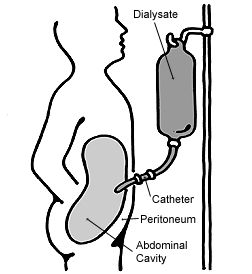
Peritoneal dialysis on the other hand does not involve the use artificial filtration membranes or removal of blood. Every human is born with what is known as a peritoneal membrane a one cell thick lining which covers the internal organs within the abdomen. This lining is richly supplied by blood vessels. The peritoneal dialysis procedure makes use of this by infusing fluid into the peritoneal cavity. The fluid infused is sterile, free of bacteria and toxins. Because the peritoneal lining is only a single cell thick and richly supplied by blood vessels any toxins present within the blood will slowly leech through the peritoneal membrane and into the fluid that was placed in the abdomen. After a period of time has elapsed the fluid becomes filled with toxins that have been removed from the body. The fluid can then be drained out of the abdomen and fresh fluid replaced to continue the process of dialysis. The procedure generally takes longer than haemodialysis but the patient is ambulant during that time and not confined to a dialysis chair. Patients are taught the sterile technique of self dialysis and may even perform the procedure while at work at school or on vacation at a resort. With peritoneal dialysis you take your dialysis unit with you.